
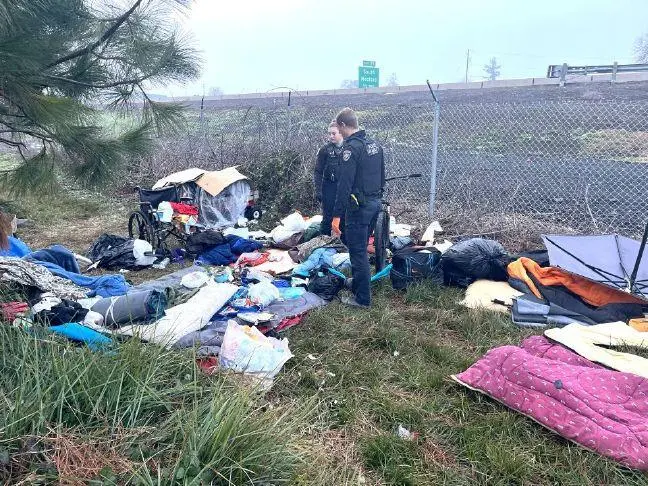
Homelessness affects about 23 people per 10,000 in the United States. Here is one of their stories.
Thomas Whisenant served in the US military for a year in 1973 before being medically separated. The Military did not educate veterans about their benefits back in the day. He went back home and stayed with his parents, then a few friends, before moving in with his first wife. They split up in ’75, and after willingly giving everything to her, Mr. Whisenant ended up homeless for the first time. He tells us, “I never thought of being homeless as a negative thing in my life; some people go through it.” “The hard part was not feeling safe and staying full.”
Mr. Whisenant did not feel the need to seek help for 47 years. His “bad luck with women and being extremely independent” caused years of on-and-off homelessness, and it caught up with him in 2022, when Mr. Whisenant was sent to the hospital and diagnosed with diabetes. He couldn’t take care of himself and needed to find housing to be discharged from the hospital. He was no longer qualified for VA housing because he needed care. Warrior Services took up his case, and after 2 years of being in and out of unstable housing, he has been settled in his place since 2024 and “couldn’t ask for anything more”. Mr. Whisenant’s advice for anyone experiencing homelessness is “to accept help.”
Below are the 2025 statistics for homelessness and chronic cases in Oregon. Over 20,000 Oregonians are experiencing homelessness, which has risen about 22% from last year. In 2023, Governor Tina Kotek declared a state of emergency for people experiencing homelessness and has extended it until 2027. Housing costs are expected to continue rising, making new constructions more expensive, and funding is lacking to keep up with the homeless emergency. Only 14,000 buildings were constructed last year, 22,000 short of the governor’s goals. With housing scarcity comes higher rent, making donations and funding for housing a top priority in the fight against homelessness. Start looking for help by dialing 211 or by visiting their website to access program information.
Breakdown of Living Situations
| CATEGORY | COUNT | PERCENTAGE OF TOTAL | YEAR-OVER-YEAR CHANGE |
| Emergency Shelter | 5,920 | 29.4% | +3.8% |
| Transitional Housing | 1,186 | 5.9% | +5.1% |
| People in Vehicles | 4,850 | 24.1% | +15.3% |
| People in Tents/Encampments | 6,120 | 30.4% | +18.9% |
| People in Abandoned Buildings | 2,034 | 10.1% | +16.2% |
| Total Unsheltered | 13,004 | 64.7% | +17.2% |
| Total Sheltered | 7,106 | 35.3% | +4.2% |
Data Source: Oregon Housing and Community Services, Portland State University Homelessness Research & Action Collaborative 2023 Report
Chronic Homelessness in Oregon 2025
Long-Term Homelessness Patterns
| CATEGORY | COUNT | PERCENTAGE OF TOTAL | AVERAGE DURATION |
| Total Chronic Homeless Individuals | 4,234 | 21.1% | 3.2 years |
| Chronic Homeless in Shelter | 1,456 | 34.4% | 2.8 years |
| Chronic Homeless Unsheltered | 2,778 | 65.6% | 3.6 years |
| With Serious Mental Illness | 2,964 | 70.0% | — |
| With Substance Use Disorders | 3,177 | 75.0% | — |
| With Physical Disabilities | 1,861 | 44.0% | — |
| Chronic Homeless Age 55+ | 1,819 | 43.0% | 4.1 years |
Data Source: Oregon Housing and Community Services, HUD Chronic Homelessness Definition



Leave a Reply